Training
Workshops
At Blue Sky Organics, our hands-on training workshops are designed to give you a solid foundation in organic farming, sustainable living, and soil health. Whether you want to grow your own food or farm on a larger scale, our courses provide practical knowledge you can apply immediately
Location: Blue Sky Organics Farm, Klein Karoo Accommodation: Available on-site with meals included
Our Training Approach
We offer focused workshops tailored to two groups:
- Individuals wanting to grow their own food and live sustainably
- Farmers looking to transition to organic practices
Each workshop combines theory and practical experience to help you understand the natural systems behind healthy soil, plants, and ecosystems.
Workshop overview
- Duration: 3-day intensive training
- Format: Small group setting for personal attention and interactive learning.
- A balance of classroom-style teaching and field-based demonstrations.
- Step-by-step guidance through essential organic farming practices.
- Exposure to real systems used on a successful organic farm
what you will learn
- Principles of organic and regenerative farming
- Soil health and compost making
- Growing nutrient-rich food sustainably
- Understanding natural systems and ecosystems
- Making confident decisions using proven natural laws
- This training focuses on practical, time-tested knowledge that removes confusion and empowers you to grow successfully.
Why join our training
With growing demand for healthy, ethically produced food, understanding how to farm and live sustainably has never been more important. Our workshops give you the clarity, confidence, and skills you need.
- A clear understanding of organic farming principles
- Confidence to start or improve their own growing practices
- Practical skills
WORKSHOP FACILITATOR:
Farmer Liz Eglington has been farming olives, fruit and vegetables organically on the farm for 20 years. She has been awarded Woman Farmer of The Year, Finalist “Most Influential Woman in Agriculture”, Finalist Eco Warrior for Enviropaedia Awards. Liz has been actively involved in Environmental work and the development of Organic Agriculture in SA through 12 years as Director and Secretary of SAOSO (SA Organic Ass), Founding Member and Secretary of PGSSA (Participatory Guarantee Systems), and Chairperson Of Conservation@Work for 8 years.
Workshop Content Overview:
With growing global environmental and health challenges, more people are recognising the importance of producing and consuming ethically grown, nutrient-rich food. At the same time, while information about growing food is widely available, it can often be confusing and contradictory.
This workshop focuses on the fundamental principles of organic farming — understanding natural laws, building healthy living soil, and growing strong, vibrant plants. These time-tested foundations remove uncertainty and empower you to confidently apply sustainable practices.
Participants gain practical knowledge that can be used to evaluate information, make informed decisions, and grow food in a way that supports both personal health and the environment.
The training is especially valuable for:
Small-scale and commercial farmers
Individuals wanting to grow their own food
Retailers and health practitioners seeking a deeper understanding of organics
Through a combination of theory and hands-on learning, this workshop provides the tools needed to farm, grow, and live more sustainably.
The workshop covers the following:
1 Practical Session:
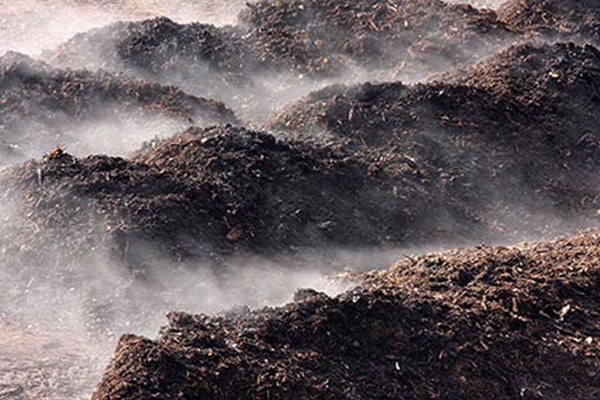
- Watching a compost heap being built from scratch to completion over the 3 days
- Working with vermicasts at a wormfarm setup, and making worm or vermicast tea.
- Making bokashi as a rich nutrient feed for plants and trees
- Making herbal teas as a natural pesticide/repellent and as a rich nutrient feed for plants and trees
- Collecting and Saving seeds. Practical session on how to collect, dry, separate out and store seeds- each participant will take home several packets of organic and heritage seeds
- Planting trees- a practical session on how best to plant trees, compost and mulch them and ensure their healthy survival.
Different irrigation systems. Examples of each and their benefits or otherwise. - Walking through the fruit, herb and vegetable gardens and discussing the salient points gathered in the theoretical sessions.
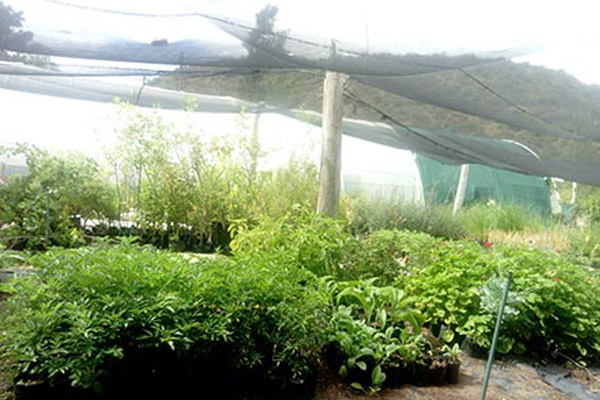
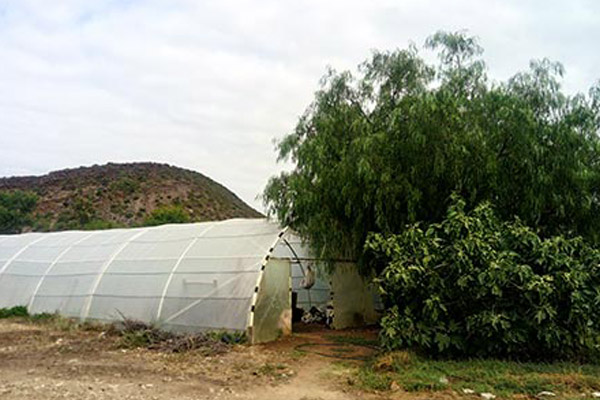
- Pruning practical session and using the prunings to create cuttings in the propagation tunnel- and discussions on what best materials to use.
- Walking the nursery to witness benefits of propagation.
- Planting seeds, planting out seedlings. Making up the best potting soil.
Tour of “chicken palace” with some best practice discussions on having happy chickens - Tour of agro-forestry plantings to cover the soil, utilise “dead spaces” and create a vibrant diverse eco-system and fodder for the compost heaps.
- How to make cost effective drying areas for excess herbs, fruit and vegetables.
Practical examples of planting all year round food for bees and pollinators. - Practical examples of protecting vegetable and fruit gardens from wild foragers (birds and animals) and also leaving “free food” for them.
2. Theoretical Sessions
Conveyed Through Powerpoint presentations and watching important powerful DVD’s and Interviews.
3. Subjects Covered
- Why Organic. The devastation wreaked on the Planet, humans and animals as we moved AWAY from organic.
- In depth study of the structure of HEALTHY soil. Types of soil, PH and what it means, soil minerals and what causes imbalances- and how this affects our health and soil health, understanding the ratios and relationships. The new research information has revealed that NPK are essential but NOT the most important minerals, and we go in depth into the Biological Sequence of the minerals, and how they are connected and work together IN SEQUENCE. A lack affects the entire chain of 17 minerals required for healthy trees and soil.
- Inter cropping and companion planting. There is wonderful new information based on research trials of how many seeds and how many seed families are optimum to grow together. This is a non-input way to put nutrients and carbon back into orchards.
-
Micro-organisms- what they are, what they do and their essential co-existence in soil with each other and with plants. There is a plethora of books now published that deal just with micro-organisms because we are only now realising their importance. They are the army under and within the soil that we kill with our unsustainable farming and chemical practices.
- Roots. How they work, how they take up minerals and nutrients, and their relationships with each other and the micro-organisms that live on them.
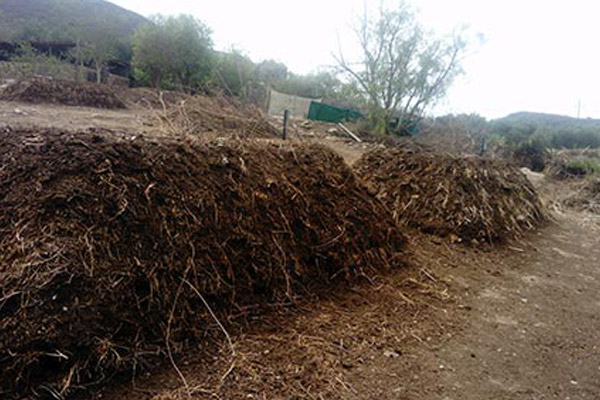
- Compost- what is it and what is it not. Different types of compost, and how to make them. How to measure them, and use them. Practical compost making.
- Worm farming and vermi-compost.
Mulching and keeping the ground covered is one of the most important activities on an organic farm and in growing your own food.
We learn these concepts in a theoretical and practical way on the Organic Training workshop on the farm.

© Blue Sky Organics 2026
Website Designed by Madredp
Email:
Phone: (Whatup only)
083 653 3635
Address
Buffelshoek Farm, Olyvenrivier Valley,
Van Wyksdorp, Western Cape, South Africa